
I’ve seen thousands of players hit the same wall.
You’re grinding daily. Your mechanics are solid. You know the maps and the meta. But you’re stuck watching players who don’t seem that much better than you climb ranks you can’t reach.
The gap isn’t talent. It’s approach.
DTRGSGAMER exists because I got tired of watching skilled players waste their potential on random practice routines and outdated advice. Most gaming content teaches you what to do. Almost none of it teaches you how pros actually train.
I’ve spent years analyzing what separates elite competitors from everyone else. Not the flashy plays you see on stream. The daily habits you don’t.
This guide shows you the professional systems that top players use to improve. The mindset shifts that unlock performance. The training methods that actually work when you’re trying to break through a ceiling.
You’re here because basic tips stopped working. You need a real roadmap.
That’s exactly what you’re getting. No fluff about “just practice more” or generic advice you’ve heard a hundred times.
Just the proven strategies that turn good players into competitors who win.
The Pro Mindset: Winning the Game Before It Starts
You ever notice how some players just don’t break?
They lose a round. Their teammate whiffs an easy shot. They get caught out in a bad rotation. And somehow they just keep playing like nothing happened.
Meanwhile, you’re three deaths in and already typing in chat.
I’m not going to tell you tilt doesn’t happen. It does. To everyone. Even the pros you watch on stream (they just hide it better).
But here’s what most gaming advice dtrgsgamer content won’t tell you. The difference between good players and great ones isn’t mechanical skill. It’s what happens in the 10 seconds after you mess up.
Emotional Regulation and Conquering Tilt
Let me ask you something. What sets you off?
Is it the teammate who won’t stop backseat gaming? The opponent who teabags after every kill? Or maybe it’s just you, missing the same shot you’ve hit a thousand times.
You need to know your triggers. Not in some vague “I get frustrated sometimes” way. I mean the specific moments that make your heart rate spike and your decision making fall apart.
Here’s what works.
The Tactical Pause. After a bad death or frustrating loss, step away for 60 seconds. Not to scroll your phone. Not to grab a snack. Just breathe and reset.
I know what you’re thinking. “I can’t pause in ranked.” You’re right. But you can use those death timers. You can take an extra second before queuing the next match.
The Power of Objective Self-Analysis
Most players review their gameplay wrong.
They watch their VODs looking for proof that their teammate threw. Or that the enemy got lucky. Or that the game’s broken.
That’s not review. That’s just confirmation bias with extra steps.
Real analysis means owning every decision you made. Even the ones that didn’t look like mistakes at the time.
Try this for one week.
Keep a Mistake Journal. Every time you die in a way that matters, write it down. Then ask yourself one question: what could I have done differently?
Not what your teammate should have done. Not what the game should have fixed. What YOU could have changed.
| Common Excuse | Real Question |
|—————|—————|
| “My teammate didn’t follow up” | Did I communicate my plan clearly? |
| “I got unlucky” | Was I in a position where luck mattered? |
| “They’re just better” | What specific skill gap can I work on? |
Here’s the thing nobody tells you. You won’t find a mistake every time. Sometimes you just get outplayed. But if you’re honest, you’ll find something to work on about 80% of the time.
And that 80%? That’s where you actually get better.
Some people say you shouldn’t be so hard on yourself. That focusing on mistakes kills your confidence. And look, I get it. Beating yourself up after every death isn’t healthy either.
But there’s a difference between self-criticism and self-awareness.
One makes you feel bad. The other makes you better.
When you need gear that won’t distract you from this mental game, check out which headphones should i get dtrgsgamer. Because the last thing you need when you’re working on your mindset is audio cutting out mid-clutch.
Deliberate Practice: How to Train with Purpose
You’re putting in the hours.
But are you actually getting better?
Most gamers I talk to spend 4 or 5 hours a day playing. They grind ranked matches until their eyes hurt. Then they wonder why their rank stays the same month after month.
Here’s what nobody tells you.
Time spent doesn’t equal skill gained. You can play 1000 hours and still be stuck in the same rank if you’re just going through the motions.
Some people say practice makes perfect. Just keep playing and you’ll naturally improve over time.
That’s wrong.
Practice makes permanent. If you’re repeating the same mistakes for 100 hours, you’re just getting really good at playing badly.
What you need is something different. Something I learned after watching my own gameplay stagnate for an entire season.
Structuring Your Sessions for Maximum Growth
There’s a huge difference between grinding and deliberate practice.
Grinding is when you queue up for match after match without thinking. You’re on autopilot. Sure, you might win some games, but you’re not targeting your weak points.
Deliberate practice is different. You isolate ONE specific skill and work on it until it clicks.
Think about it like this. If your aim is terrible, playing 10 ranked matches won’t fix it. You’ll just lose 10 matches because your aim is terrible.
Here’s what works better:
Use the Block Method. I break my sessions into focused chunks where I work on single skills.
ACTIONABLE TIP: Set up your practice blocks like this. Spend 30 minutes in aim training software working ONLY on tracking or flick shots (pick one, not both). Then take 30 minutes to load up a custom game and practice positioning on one specific map. Finally, jump into 60 minutes of ranked play where you focus exclusively on your communication and callouts.
Not your aim. Not your movement. Just comms.
The dtrgsgamer approach is about being intentional with every minute you spend practicing.
Does this take discipline? Yes.
Is it boring sometimes? Absolutely.
But here’s what happens. After two weeks of this, you’ll notice your improvement curve shoots up. Skills that felt impossible start to feel natural.
Optimizing Your Gear and Settings for Consistency
Your setup matters more than you think.
I’m not talking about buying expensive gear (though a decent mouse helps). I’m talking about CONSISTENCY.
If your chair height changes every day or your monitor is at a weird angle, you’re fighting against muscle memory. Your body can’t build the patterns it needs when everything keeps shifting.
Get your ergonomics right. Chair at the right height. Monitor at eye level. Keyboard and mouse positioned so your arms aren’t cramping after 20 minutes.
This isn’t just comfort. It’s injury prevention. Wrist pain and back problems will end your gaming career faster than any losing streak.
ACTIONABLE TIP: Find your true sensitivity and never touch it again. Use the PSA method or another structured approach to dial in a mouse sensitivity that lets you make tiny adjustments for headshots AND do a comfortable 180-degree turn when someone flanks you. Test it for a week in different scenarios.
Once you find it? Lock it in.
I see players changing their sens every other day because they had one bad match. That’s like trying to learn piano on a different keyboard every time you practice.
Your muscle memory needs repetition with the SAME settings. Give it that and watch your consistency skyrocket.
Game IQ and Strategy: Out-thinking the Competition
You can have perfect aim and still lose.
I’ve watched players with incredible mechanical skills get destroyed by teams that just think better. It happens all the time.
The difference? Game IQ.
Some people argue that raw talent beats strategy every time. They say if you can’t hit your shots, communication won’t save you. And sure, you need baseline skills.
But here’s what that misses.
A team with average aim and great strategy will beat a team with great aim and no coordination. I’ve seen it happen in every competitive game I’ve played.
Let me show you how to actually out-think your opponents.
Mastering High-Value Communication
Most players talk too much or say nothing useful.
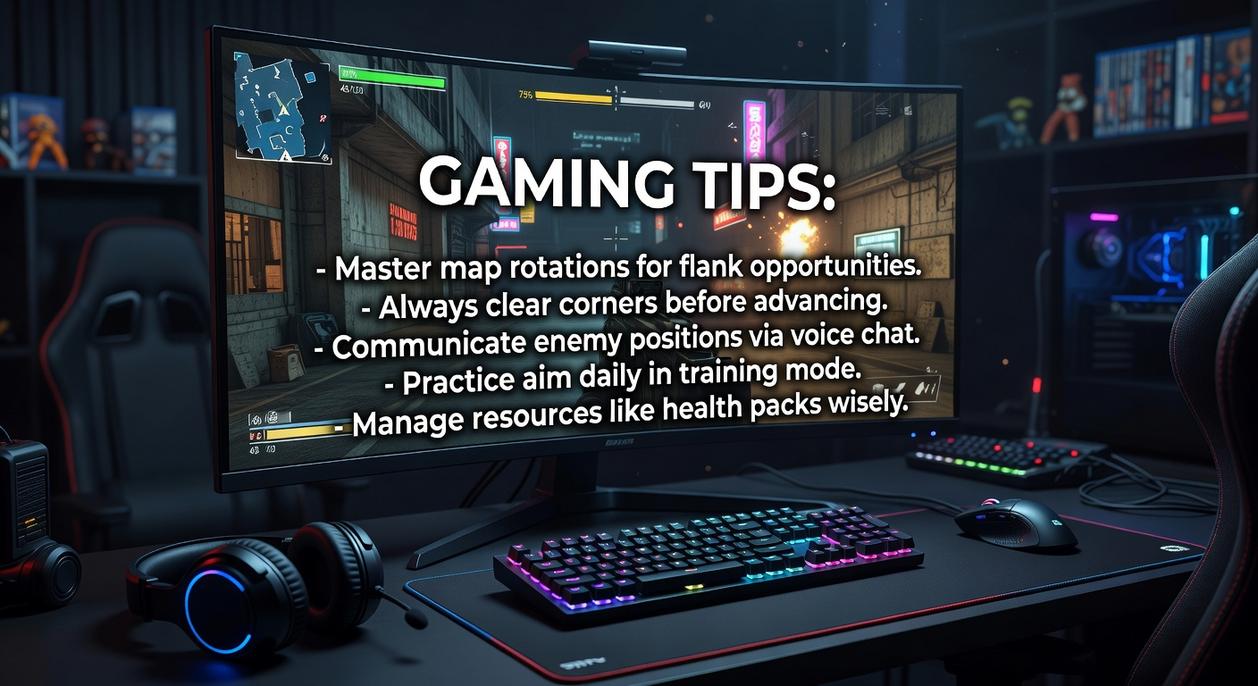
Effective communication is about quality, not quantity. Your callouts should be concise and predictive. That means giving your team what they need before they have to ask for it.
Here’s a simple framework I use.
Practice the ‘What, Where, How’ method for callouts. Instead of panicking and yelling “Reaper behind!”, try this: “Reaper, teleported, top-right catwalk, no wraith.”
See the difference? Your team knows exactly what threat they’re facing, where it is, and what abilities are down. They can react instantly.
According to a 2023 study by the University of York, teams using structured communication protocols won 34% more engagements than teams using unstructured callouts (it’s basically the difference between winning and losing close matches).
That one change will improve your win rate more than grinding aim drills for hours.
Understanding and Exploiting the Meta
The meta is the current dominant strategy in your game.
Most players just copy what pros do without understanding why it works. That’s a mistake. Pros don’t just follow the meta. They understand why certain strategies dominate and how to counter them.
Think about it like this. If everyone’s running the same composition, someone who knows the weakness of that comp will farm wins.
Spend 20 minutes before your gaming session reading the latest patch notes. Better yet, watch a pro player break down what changed. Identify one key change and think about how it affects your main character or role.
For example, when Overwatch 2 nerfed Sojourn’s railgun damage by 10% in Season 3, smart players immediately switched to counters that could now survive her burst (suddenly Genji became way more viable in those matchups).
You don’t need to memorize every number. You just need to know what shifted and why.
Pro Tip: Keep a simple spreadsheet or note on your phone. Write down one meta change per week and how you plan to adapt. After a month, you’ll have a massive advantage over players who just complain about patches.
The games guide dtrgsgamer approach is simple. Learn the why behind the what. When you understand the reasoning, you can predict what comes next.
And prediction is how you win before the fight even starts.
The Gamer’s Physical Edge: Health and Longevity
Your Body is Part of Your Hardware
You wouldn’t run a high-end rig without proper cooling, right?
Your body works the same way. I’ve tested this myself after noticing my KDA dropping during long sessions. Turns out my reaction time was tanking because I was treating my body like it didn’t matter.
Here’s what most gaming advice dtrgsgamer content won’t tell you. Your physical state directly affects your stats. A study from the University of Chichester found that dehydration of just 2% can reduce cognitive performance by up to 20%. That’s the difference between clutching a round and choking.
The 20-20-20 rule saves your eyes. Every 20 minutes, look at something 20 feet away for 20 seconds. Set a timer. Your future self will thank you when you’re not dealing with chronic eye strain at 25.
Between matches, do wrist circles and finger stretches. Sounds boring but it keeps blood flowing and prevents RSI. I learned this the hard way after my aim got shaky during a tournament qualifier.
Your body isn’t separate from your setup. It’s part of it.
Treat it that way and watch your performance climb.
Your Path to Professional Play Starts Now
You came here because you felt stuck.
I get it. You’ve put in the hours but your rank hasn’t budged. That’s the wall every serious player hits at some point.
We’ve covered what separates pros from everyone else: the right mindset, deliberate practice that actually matters, strategic thinking, and taking care of your body. These aren’t secrets. They’re just habits most players skip.
The difference isn’t more playtime. It’s the process.
When you structure your practice like a professional, you stop spinning your wheels. You build real skills that compound over time. That’s how you break through plateaus and keep climbing.
Here’s what I want you to do: Pick one tip from this guide. Just one.
Commit to it for seven days straight. Maybe it’s reviewing your VODs every night. Maybe it’s warming up before ranked. Maybe it’s fixing your sleep schedule.
DTRGS Gamer exists to help you make these changes stick.
One deliberate change is where progress starts. Not tomorrow. Not next season.
Right now.